
New to Chemnitz?
Everything we wish someone had told us before we landed — arrival paperwork, official links, where students bank and work, and the places that make this city home. Researched and link-checked in June 2026.
Facts and prices on this page were verified against official sources in June 2026. Rules change — always check the linked official page before relying on a number.
Your first weeks: the checklist
Register your address (Anmeldung)
Within 14 days of moving in, register at a Chemnitz Bürgeramt. Book the appointment online; you'll receive the Meldebescheinigung you need for almost everything else.
chemnitz.de/terminvereinbarungEnrol at TU Chemnitz (IUZ)
The International Office (IUZ) is your main contact for admission, enrolment and welcome services — including a Student Buddy programme for newcomers.
tu-chemnitz.de/internationalGet German health insurance
Health insurance is mandatory for students in Germany. You need valid insurance coverage before completing your enrolment process. International students can choose from different approved providers — always check the latest requirements before applying.
Know MoreOpen a bank account
A German bank account (Girokonto) is useful for everyday payments such as rent, contracts, and student services. Students can choose between different banking options available in Germany. Before opening an account, check the requirements directly on the official bank website.
studying-in-germany.orgActivate your semester ticket
As a student of TU Chemnitz, your semester contribution already includes the Deutschlandsemesterticket, which can be accessed after enrolment or re-registration through the official Student Council (StuRa) platform; it allows you to use local public transport across Germany according to the current regulations and validity rules, so always refer to the official TU Chemnitz or StuRa sources for the most up-to-date information.
Activate Your Semester TicketBroadcasting fee (Rundfunkbeitrag)
Every household pays €18.36/month (one fee per flat — flatmates split it). You'll get a letter after your Anmeldung; register your household online.
rundfunkbeitrag.deResidence permit (Ausländerbehörde)
International students from outside the EU need to apply for a residence permit before their visa expires. Start the process early and follow the instructions provided by the Chemnitz Foreigners’ Authority.
chemnitz.deApply for student housing
The Studentenwerk runs ~2,750 dorm rooms in 15 halls with all-inclusive rent. Apply early — winter semester applications run 1 April to 31 July.
swcz.de
Official links
Stadt Chemnitz
Official city portal with services for residents and newcomers.
Bürgeramt appointments
Online appointment booking for registration and city services.
TU Chemnitz – International Office (IUZ)
Admission, enrolment and welcome services for internationals.
Studentenwerk Chemnitz-Zwickau
Student dorms, BAföG and the Mensa.
Semester Ticket
Local buses and trams, tickets and the semester ticket.
VMS – regional transit
Central Saxony transport network: regional fares and timetables.
Rundfunkbeitrag
Register and manage the mandatory broadcasting fee.
Chemnitz tourism portal
Sights, events and city maps.
DAAD – Study in Germany
Scholarships, accommodation finder and practical guides.
University & student life
TU Chemnitz – Incoming students hub
Applications, settling in, German courses and the Buddy Program.
TU Chemnitz – Apply
Application guidance for internationals — no tuition fees in Saxony.
TU Chemnitz – Course catalog
All courses by faculty, with timetable builder.
StuRa TU Chemnitz
Your student council — representation, advice and events.
Studentenwerk – BAföG & finances
Student financial aid applications and advice.
TU Chemnitz – Career Service
Career counseling, application support and the TUCconnect fair.
Banking for students
N26
Fully mobile, English app, opens in minutes — no Anmeldung needed. The newcomer favourite.
Sparkasse Chemnitz
The local bank: free student account and ~20,000 free ATMs nationwide.
Commerzbank StartKonto
Free for under-28s, English online banking.
Deutsche Bank – Das Junge Konto
Free checking up to age 30, withdrawals in 30+ countries.
Expatrio (blocked account)
Sperrkonto for the visa, fully online — 2026 amount: ~€11,904/year.
Fintiba (blocked account)
Blocked account at a German bank, can bundle health insurance.
Finding a flat
Beyond the Studentenwerk dorms: the city's big landlords and cooperatives, plus the portals everyone actually uses.
GGG – StudiWohnen
Chemnitz's biggest (municipal) landlord — 1-4 room flats city-wide and a dedicated StudiWohnen programme for students. German only.
CAWG eG
Housing cooperative with 6,000+ flats, campus rooms and furnished short-stay options. German only.
WCH eG
Cooperative with ~4,400 apartments in Helbersdorf, Kappel and Morgenleite — near campus. German only.
Chemnitzer Siedlungsgemeinschaft eG
100-year-old cooperative with ~5,000 flats in Kaßberg, Altendorf and Bernsdorf. German only.
WG-Gesucht – Chemnitz
Germany's flatshare marketplace (rooms ~€215–350/month) — full English interface, the best first stop for newcomers.
ImmobilienScout24 – Chemnitz
Germany's largest property portal — aggregates listings from all providers and private landlords.
Companies & the startup scene
Chemnitz is an engineering town with a growing tech scene — from the VW engine plant to Staffbase, the city's own unicorn. Good news if you're looking for working-student jobs or a career after graduation.
Volkswagen Sachsen – engine plant
TSI engines for the VW Group — ~1,800 employees, one of the city's largest employers.
Siemens Chemnitz (WKC)
Customized electrical equipment and power electronics.
Staffbase
Chemnitz-founded employee-communications unicorn — 750+ people, HQ split Chemnitz/New York.
3D-Micromac
Laser micromachining for semiconductors — on the Smart Systems Campus.
KOMSA
Europe's largest private telecom/IT distributor, ~900 employees nearby.
NILES-SIMMONS
High-precision CNC machine tools for aerospace and automotive.
FDTech
Automated-driving software, founded 2017, 150+ engineers.
Fraunhofer ENAS
Applied research in smart systems and MEMS — anchor of the Smart Systems Campus.
Start-up Gründerzentrum (Smart Systems Campus)
The startup incubator next to TU Chemnitz, home of TUClab.
SAXEED – Gründungsnetzwerk
TU Chemnitz-anchored startup network: free founder consulting, bootcamps and co-founder matching — 300+ startups since 2006.
Working as a student
Make it in Germany – working as a student
Official rules: 140 full days/year or 20 h/week during lectures for non-EU students.
TU Chemnitz Jobbörse
Working-student roles, internships and theses at the university job board.
Agentur für Arbeit Chemnitz
The public employment agency — job placement and counseling for internationals.
Places we take every newcomer
Tap any card to open it on the map.
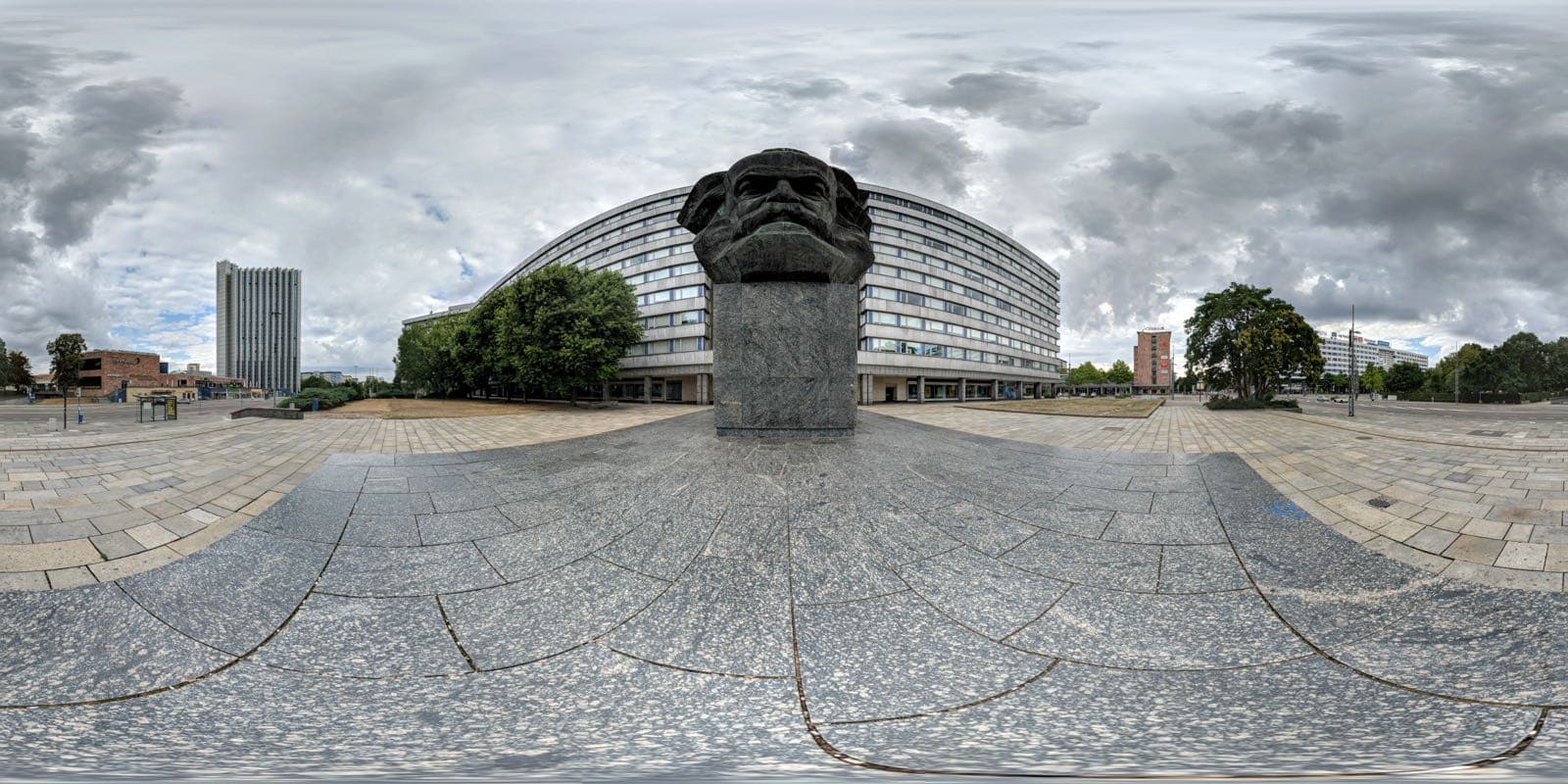
Karl Marx Monument („Nischel“)
The 7-metre bronze head (1971) is the city's most famous landmark — every Chemnitzer calls it the Nischel.
📷 Tim Rademacher · CC BY-SA 4.0
Kaßberg
One of Germany's largest Art Nouveau quarters — wide boulevards, ~480 listed buildings, and the city's liveliest café scene.
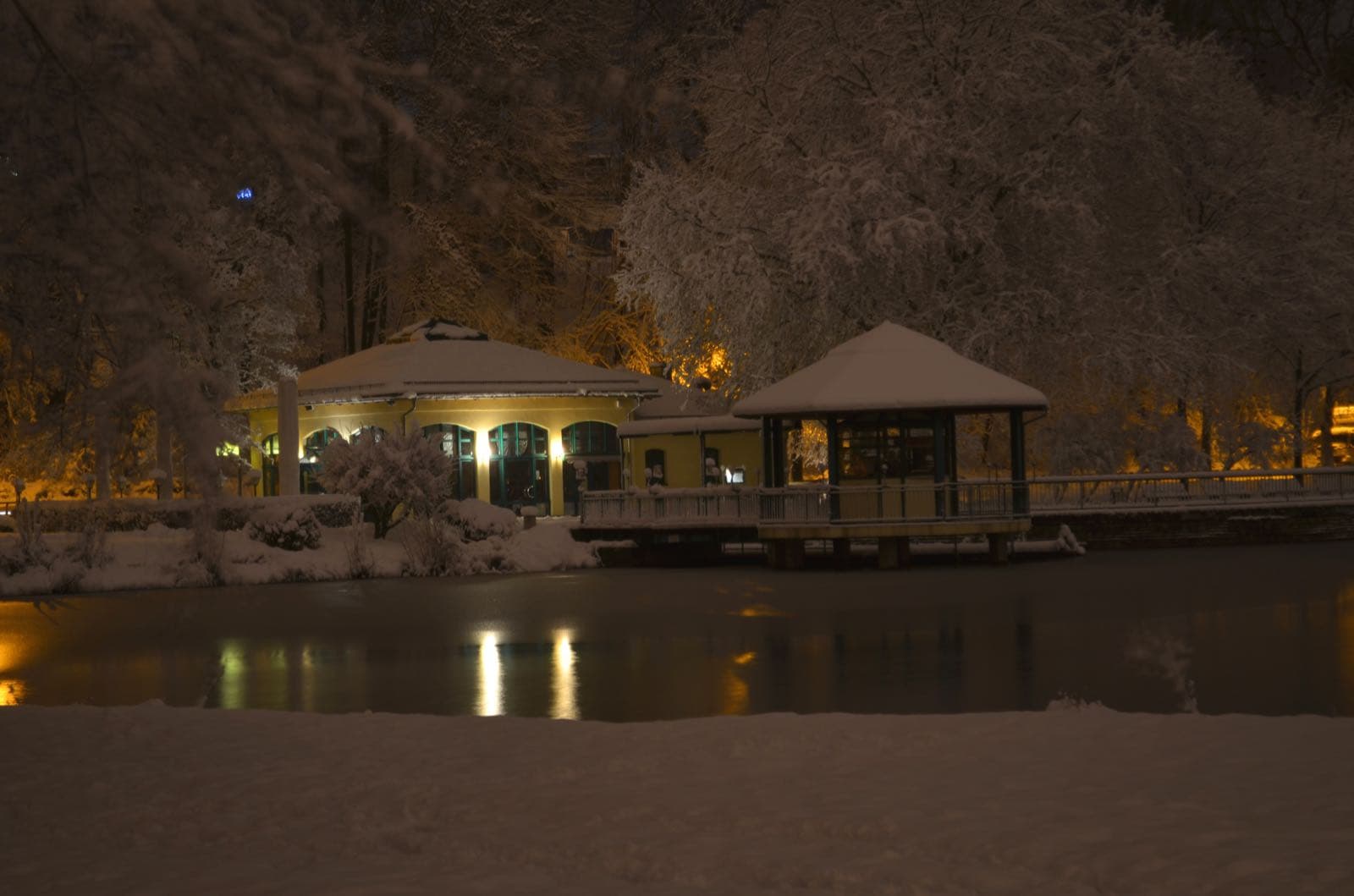
Schlossteich & Schloßberg
A lake with an island stage for summer concerts, rowing boats, and the Schloßberg museum quarter above.
📷 Dirk Liesch · CC BY 4.0
Küchwald
The city's green lung: forest trails, an open-air theatre and a miniature railway run by volunteers.
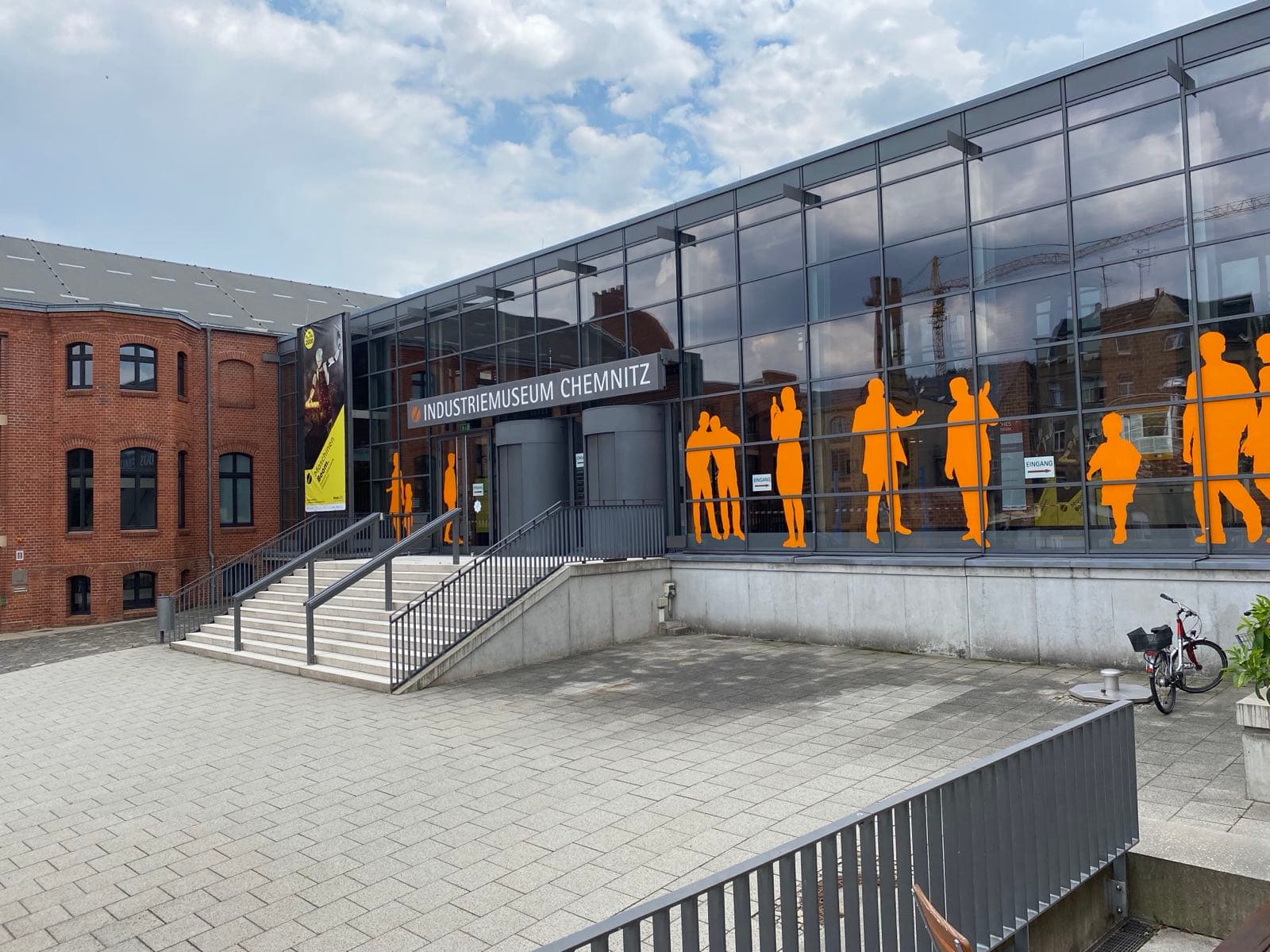
Industriemuseum
Saxony's industrial story told with running historic machines — Chemnitz was once 'the Saxon Manchester'.
📷 Dor Jörsch · CC BY-SA 4.0
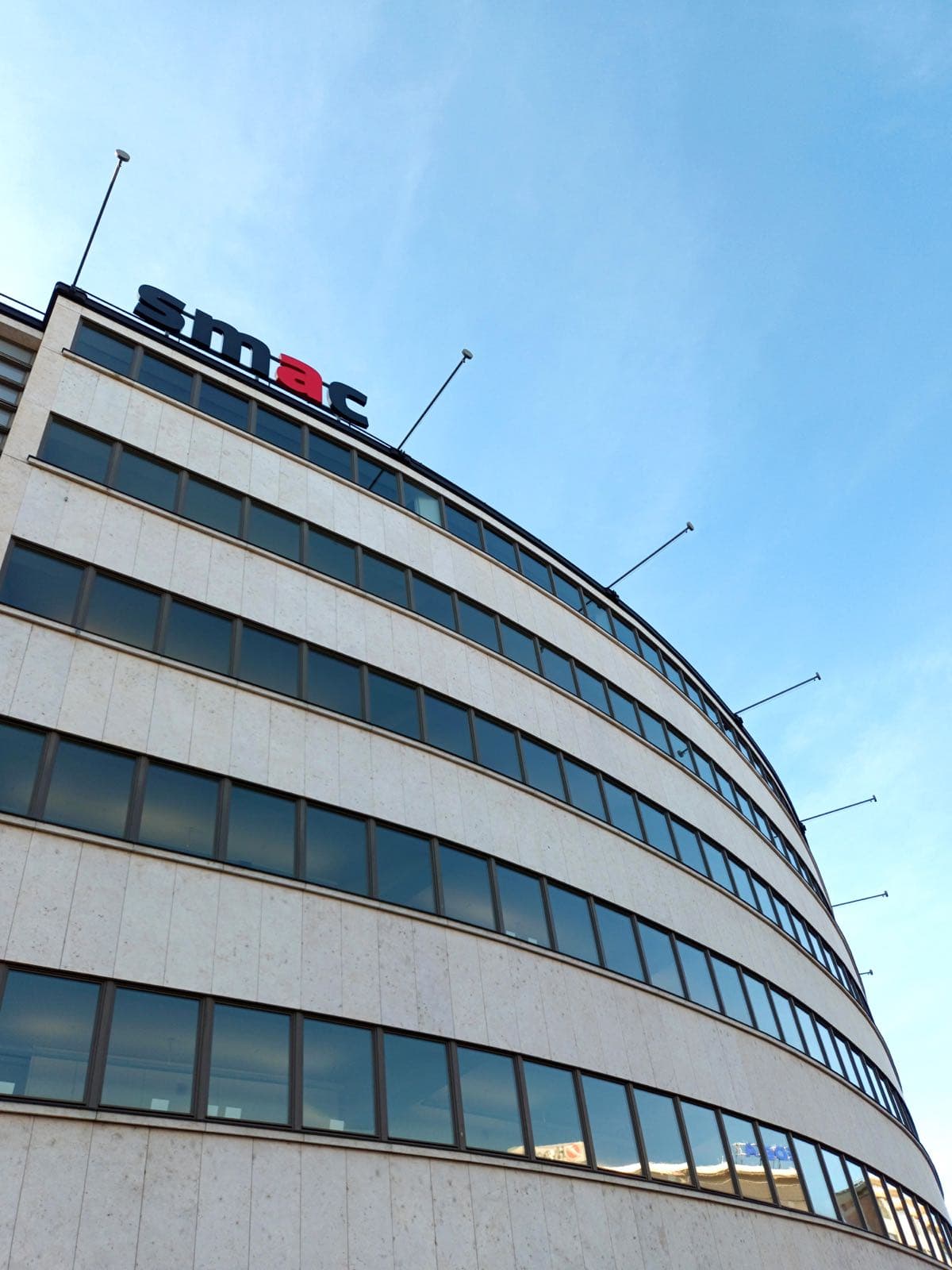
smac – Museum of Archaeology
300,000 years of Saxon history inside Erich Mendelsohn's iconic 1930 Schocken department store.
📷 Acediscovery · CC BY 4.0
Museum Gunzenhauser
One of the world's largest Otto Dix collections plus 20th-century modern art.
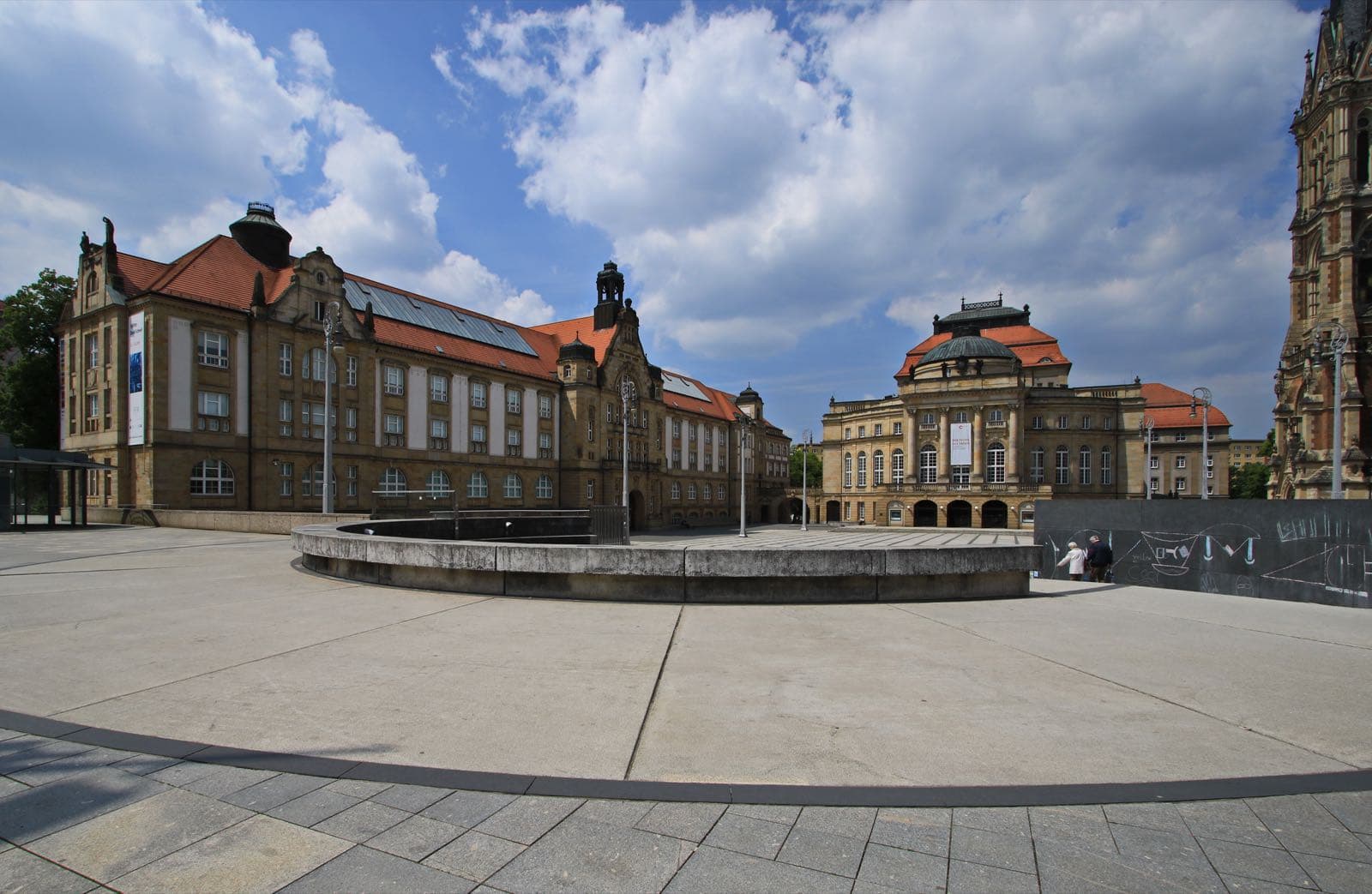
Theaterplatz & Opera House
The city's most elegant square: opera house, art museum and St. Petri church in one frame.
📷 Kora27 / Valentina Patzlaff · CC BY-SA 4.0
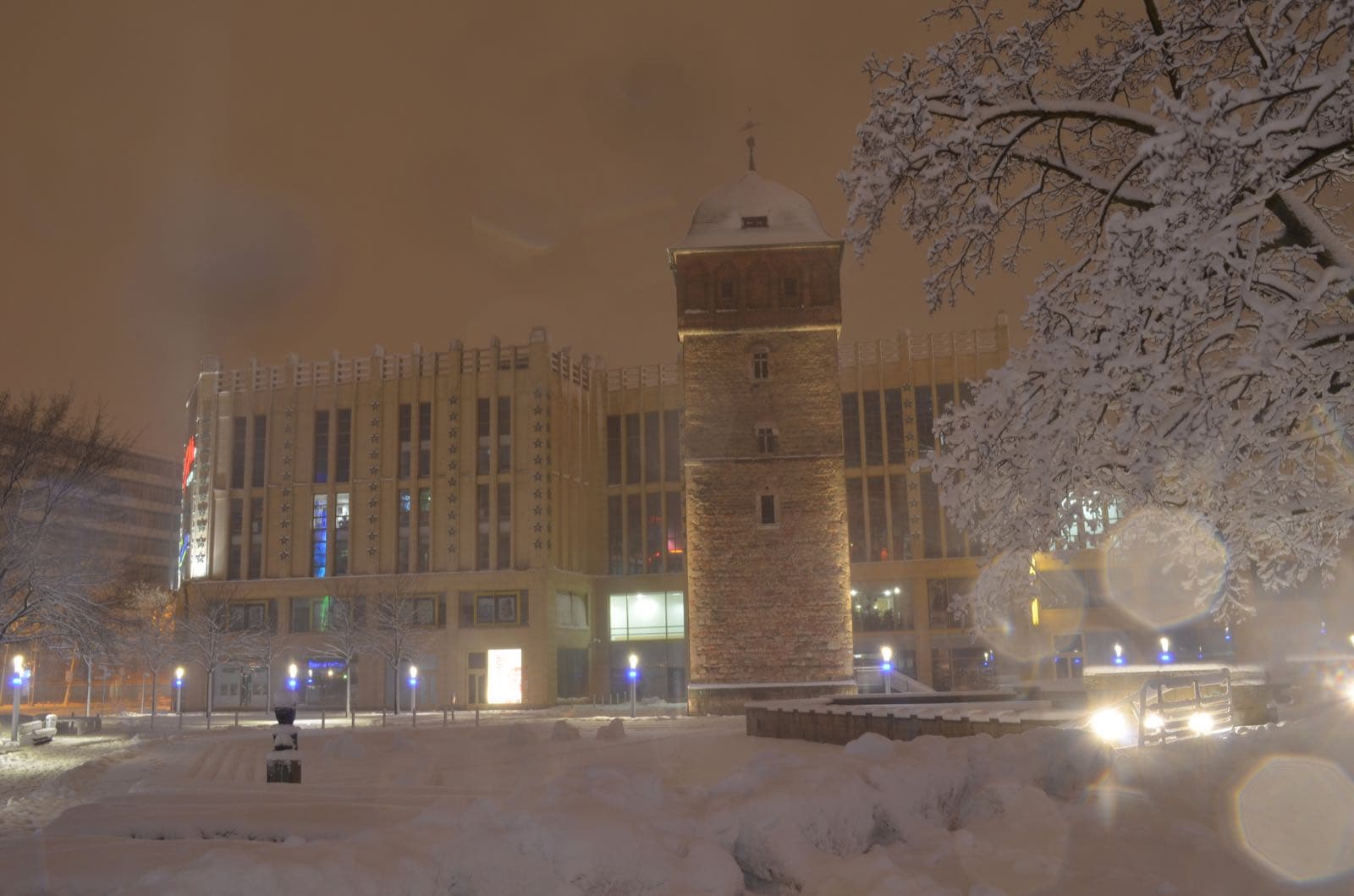
Roter Turm
The oldest building in Chemnitz — a 12th-century tower right between the shopping arcades.
📷 Dirk Liesch · CC BY 4.0
TU Chemnitz campus
The Reichenhainer Straße campus — lecture halls, dorms, the Mensa and the Orangerie all in walking distance.
Augustusburg Castle
A Renaissance hunting castle 15 km away, reached by a historic funicular — the classic weekend trip.
PURPLE PATH
The Capital of Culture 2025 legacy: a permanent art trail through Chemnitz and 38 surrounding towns.
Chemnitz in numbers
- Population
- ~251,700 (official, end of 2024) — the 3rd-largest city in Saxony.
- Capital of Culture
- European Capital of Culture 2025 — ~2 million participants at almost 2,000 events; the PURPLE PATH and legacy projects continue.
- Getting away
- By train from the Hauptbahnhof: Dresden ~1h, Leipzig ~1h, Berlin 2.5–3.5h depending on the connection.
- International city
- TU Chemnitz counts 2,819 international students (official, Nov 2025) — and the ICC community alone is 800+ members strong.
Photo credits
- Karl Marx Monument („Nischel“): Tim Rademacher (CC BY-SA 4.0, Wikimedia Commons)
- Schlossteich & Schloßberg: Dirk Liesch (CC BY 4.0, Wikimedia Commons)
- Industriemuseum: Dor Jörsch (CC BY-SA 4.0, Wikimedia Commons)
- smac – Museum of Archaeology: Acediscovery (CC BY 4.0, Wikimedia Commons)
- Theaterplatz & Opera House: Kora27 / Valentina Patzlaff (CC BY-SA 4.0, Wikimedia Commons)
- Roter Turm: Dirk Liesch (CC BY 4.0, Wikimedia Commons)